
Dog crates come in a wide range of styles and materials—but the most important decision isn’t how it looks. It’s how safe it is for your dog. Whether you’re crate training a new puppy or planning cross-country travel, selecting the right crate material—wire, plastic, or aluminum—can directly impact your dog’s safety, comfort, and behavior.
This article breaks down how each material compares when it comes to real-world safety, long-term durability, and veterinary-backed best practices.
Why Crate Safety Is Non-Negotiable
A crate is more than a containment device—it’s your dog’s safe space. But a poorly chosen crate can lead to stress, injuries, or escapes. That’s why trainers, veterinarians, and behaviorists emphasize choosing one based on behavioral needs and lifestyle factors, not just budget or size.
As noted by the American Kennel Club (AKC), an ideal crate should be appropriately sized, secure, and well-ventilated, and should promote a positive, calm experience for your dog.
Comparing Crate Materials for Safety
Let’s evaluate the three most common crate materials—wire, plastic, and aluminum—through the lens of safety, behavior, and veterinary recommendations.
Wire Crates
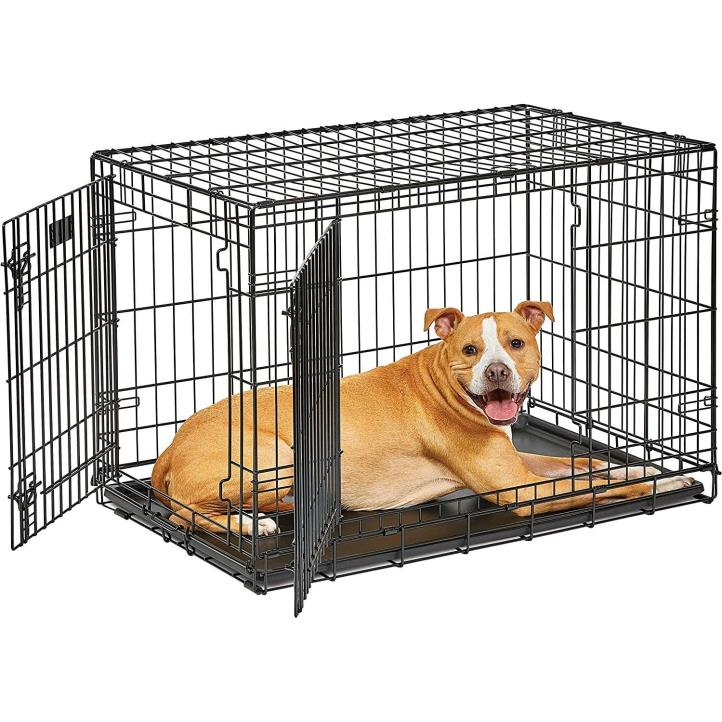
Best For: Calm, crate-trained dogs in home settings
Pros:
- Great ventilation and visibility
- Foldable for travel or storage
- Commonly used with puppies
- Affordable and widely available
Cons:
- Dogs with anxiety may chew, bend, or escape
- Latch mechanisms may be too simple
- No crash safety in vehicles
- Not airline-approved
Behavioral Consideration: Wire crates work well for calm dogs who already see their crate as a den. However, for dogs prone to anxiety or escape attempts, they may be dangerous. The AKC warns that wire crates are not suited for dogs who are easily overstimulated by external sights and sounds.
Safety Verdict: Moderate safety for non-anxious dogs. Not suited for travel or high-drive breeds.
Plastic Crates

Best For: Travel, anxious dogs, temporary recovery zones
Pros:
- Enclosed sides reduce visual triggers
- Often airline-approved (IATA compliant)
- Lightweight and easy to clean
- Great for car rides or flying cargo
Cons:
- Limited airflow
- Latches and plastic components can wear over time
- Some dogs may feel confined or overheat in warm conditions
Behavioral Consideration: Dogs who enjoy enclosed, cave-like spaces may prefer plastic crates. According to the Humane Society of the United States, crates can be particularly beneficial for dogs with anxiety when introduced correctly and paired with positive reinforcement.
Safety Verdict: Excellent for short-term travel or crate-shy dogs. Less durable over time, especially for large or destructive breeds.
Aluminum Crates
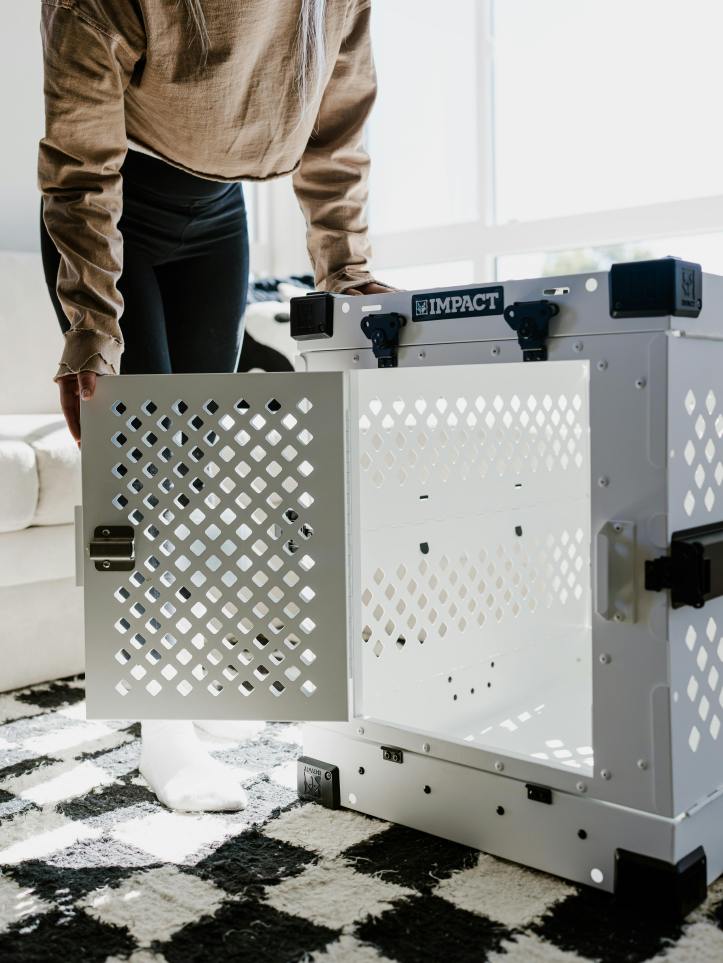
Best For: High-drive, strong, or escape-prone dogs; long-term use; frequent travel
Pros:
- Nearly indestructible—great for chewers and escape artists
- Excellent airflow and structural integrity
- Airline-compliant with proper kits
- Built-in safety latches and reinforced edges
- Rust-proof and easy to sanitize
Cons:
- Higher upfront cost
- Heavier than plastic crates
- Some models may not be collapsible
Behavioral Consideration: These crates are especially effective for dogs with strong chewing tendencies or those recovering from surgery. When crate use is consistent and properly introduced, dogs form a positive connection that reduces stress and improves behavior, as supported by the Humane Society.
Safety Verdict: Top-tier in strength and containment. Ideal for serious containment needs, working dogs, or crate escapees.
Expert Tips for Safe Crate Use
Regardless of the material, experts recommend a few non-negotiables for crate safety:
- Correct sizing: Your dog should be able to stand, turn, and lie down comfortably—no more, no less.
- Secure latches: Dogs with anxiety or problem-solving skills can easily open weak locks.
- Proper placement: Keep crates away from direct sun or cold drafts.
- Supervised use: Especially in early training or for dogs with past trauma.
The AKC also emphasizes the importance of introducing crates gradually to avoid fear-based resistance. Puppies, rescues, and sensitive dogs may need more time to feel comfortable.
Which Crate Material Is Right for You?
| Material | Best For | Not Ideal For |
| Wire | Calm, crate-trained dogs at home | Anxious or escape-prone dogs |
| Plastic | Travel, anxious or timid dogs | Strong chewers, long-term crating |
| Aluminum | Working breeds, escape risks, travel | Budget-conscious buyers, small dogs |
When to Consider Upgrading
You may need to upgrade your crate if:
- Your dog has escaped, bent, or chewed through their current crate
- You’re planning air travel or long car rides
- Your dog shows anxiety signs like barking, pacing, or self-injury
- Your crate is rusted, cracked, or has malfunctioning latches
Aluminum crates, while more expensive upfront, tend to be lifetime solutions—especially for owners of power breeds, chewers, or high-anxiety dogs.
Conclusion
Choosing the safest crate for your dog means more than just matching the right size. You need to consider your dog’s behavior, breed, and environment. While wire crates are great for calm, home-based use, plastic crates shine for travel and nervous pups. But when safety is the top priority—especially with strong or anxious dogs—aluminum crates offer the highest level of protection, structure, and peace of mind.Looking for a secure solution that supports both safety and travel-readiness? Crates like the Impact Collapsible Dog Crate are trusted by vets, handlers, and serious dog owners for one reason: they work.
 My Dog Crates