
Not every dog takes naturally to a crate. Some bark, paw, chew, or panic the moment the door closes. If your dog hates confinement, choosing the wrong crate can worsen anxiety and lead to escape attempts or injuries. But the right crate—paired with the right approach—can help even the most reluctant dogs feel safe and secure.
This article explores crate options specifically designed for dogs who dislike confinement. We’ll review key features to look for, recommended models, and how to make crate time less stressful for your dog.
Understanding Crate Aversion
Dogs who resist confinement often do so due to:
- Past negative experiences (e.g., being locked up for punishment)
- Lack of proper crate training
- Separation anxiety
- Overstimulation when crated in busy areas
- Confinement stress in rescue or shelter environments
According to the American Kennel Club (AKC), crate resistance is usually not about the crate itself, but how it’s introduced and used. When approached with care, crate training can reduce anxiety, prevent destructive behaviors, and become a dog’s go-to place for rest and calm.
What to Look for in a Crate for Crate-Averse Dogs
When choosing a crate for a dog who dislikes confinement, the following features make a big difference:
1. Visibility and Ventilation
- Look for crates with wide, clear sightlines (e.g., mesh, wire, or well-vented aluminum).
- Avoid dark, enclosed plastic crates unless your dog prefers a den-like space.
2. Quiet Design
- Crates that rattle or clang can startle anxious dogs. Choose models with solid frames and rubber feet or noise-dampening features.
3. Multiple Doors or Side Access
- Crates with front and side access provide flexibility and reduce “trapped” feelings.
- Side doors often feel less intimidating than front-only entries.
4. Heavy-Duty Latches
- Dogs with anxiety can become escape artists. Secure latching systems prevent injury and damage.
5. Calm Interior
- Soft bedding, calming pheromone sprays, and crate covers can reduce sensory overload.
Best Crates for Dogs Who Hate Confinement
Impact Collapsible Dog Crate
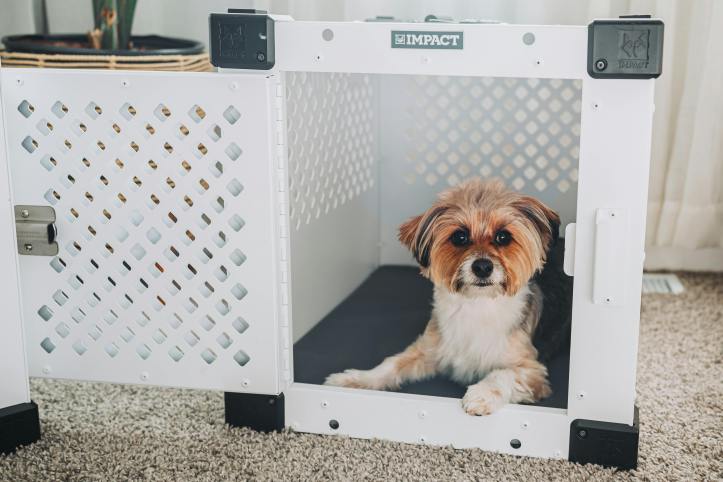
Best for: Escape-prone, anxious, or high-drive dogs
This heavy-duty aluminum crate was designed with anxious and high-energy dogs in mind. Its tight-fitting panels, secure slam-latch, and generous ventilation make it ideal for dogs who’ve escaped or injured themselves in wire crates.
Why it works:
- Quiet operation, no rattling
- Excellent visibility and airflow
- Airline-compatible with add-ons
- Nearly escape-proof but feels open, not caged
Ideal for: Dogs with moderate to severe crate anxiety who need structure but space to breathe.
Diggs Revol Crate
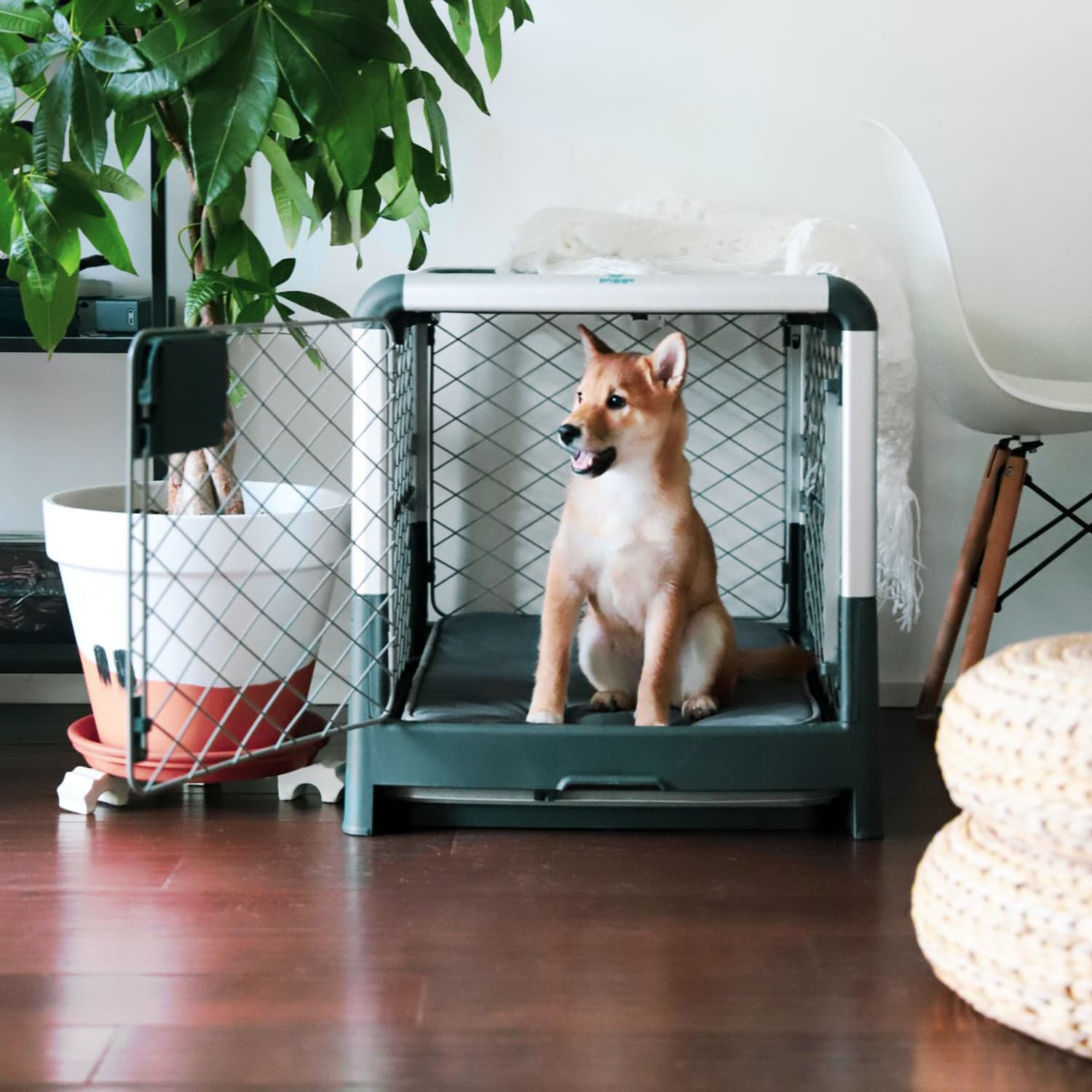
Best for: Small to medium-sized dogs with mild anxiety
This modern, collapsible crate is designed with pet comfort and human aesthetics in mind. The garage-style side door allows dogs to move in and out freely during the crate introduction phase.
Why it works:
- Rounded edges and mesh sides
- Quiet locking mechanisms
- Side door for gradual training
- Stylish enough for living room placement
Ideal for: Dogs who benefit from open access and gradual exposure.
Frisco Double Door Wire Crate
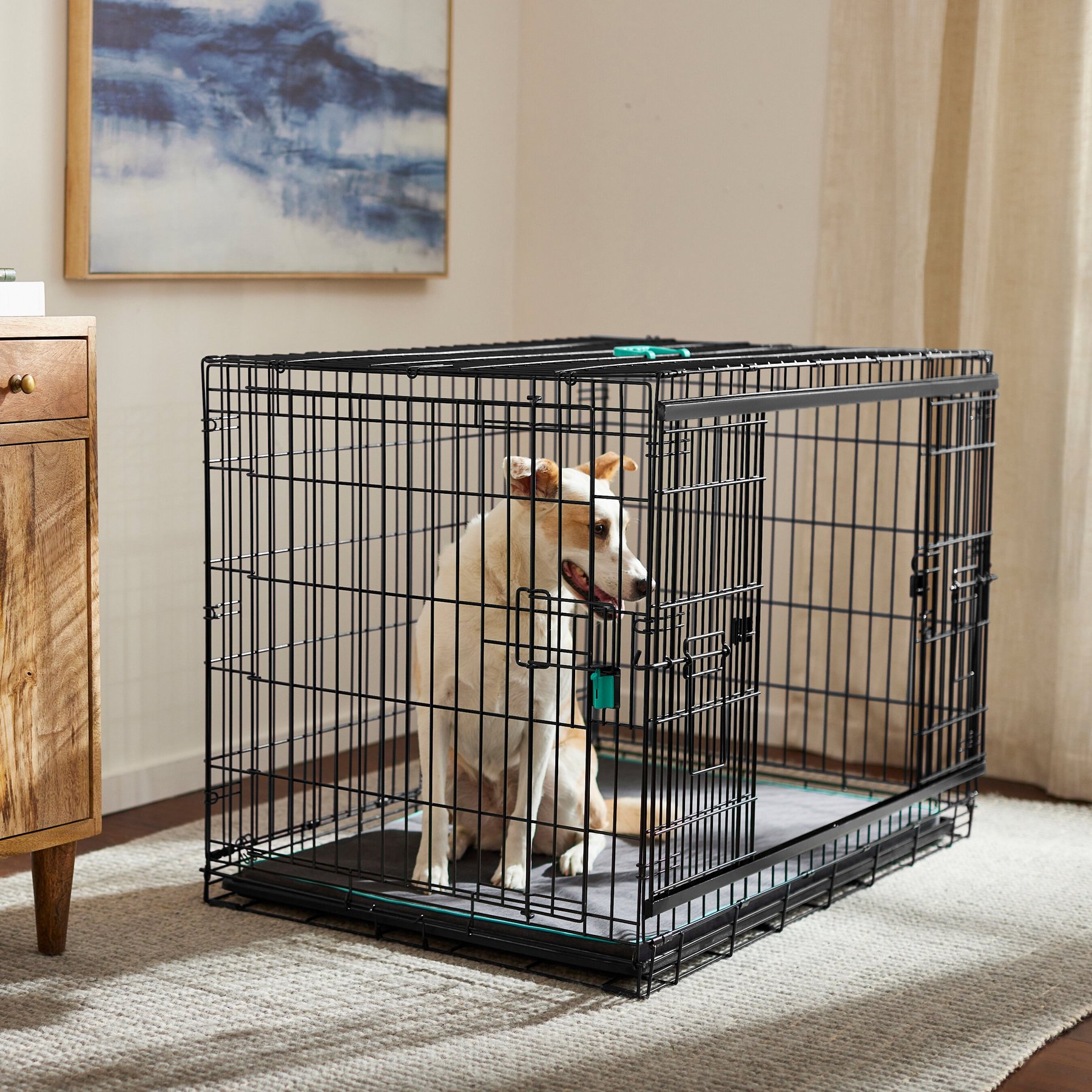
Best for: Budget-conscious owners with crate-trained but uneasy dogs
With front and side doors, a divider panel, and a sturdy frame, this crate provides flexibility during training. While not ideal for destructive dogs, it’s a great everyday option for mild crate resistance.
Why it works:
- Wide visibility
- Easy to clean
- Divider lets you adjust space
Ideal for: Dogs who dislike being closed in and need visibility or proximity to owners.
Tips for Crate Training Dogs Who Resist It
Choosing the right crate is only half the battle. You’ll need to reframe your dog’s experience with confinement using patience and positive reinforcement.
According to the Humane Society of the United States, successful crate training involves:
- Gradual introduction: Let your dog explore the crate on their own with the door open.
- Positive associations: Feed meals, give treats, or offer toys inside the crate.
- Short sessions: Start with 1–2 minutes and build up slowly.
- Never use the crate for punishment: This creates negative association and fear.
- Create routine: Dogs feel safer when they know what to expect.
You can also use crate covers to soften visual stimulation, play calming music, or try anxiety aids like Adaptil diffusers or vet-recommended supplements.
When to Avoid Crating Altogether
In rare cases, dogs with severe separation anxiety or trauma may not be suitable for crating—at least not immediately. If your dog:
- Hurts themselves trying to escape
- Screams or defecates as soon as the door closes
- Shows extreme panic or regression
…it may be best to consult a certified trainer or veterinary behaviorist. Alternatives like exercise pens, baby-gated rooms, or crate-free calm zones may work better while you build trust and training.
Final Thoughts
Dogs who hate confinement don’t always need to avoid crates—they just need the right type of crate and the right training strategy. Whether you opt for a high-security aluminum crate like Impact, or a flexible and visually open model like Diggs, the key is to match the crate to your dog’s needs and introduce it gradually.
With the right setup, even the most crate-averse dogs can learn to see their crate as a place of peace—not punishment.
Still unsure where to start? Refer to trusted training advice from the AKC or the Humane Society to guide your approach.
 My Dog Crates